|
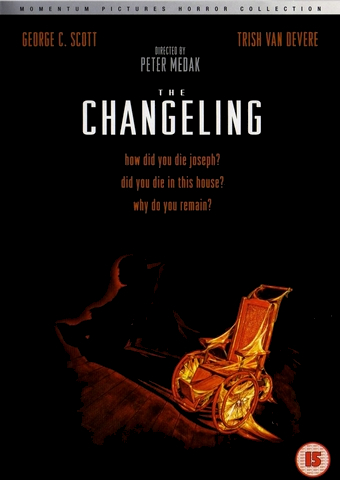
The Changeling (1980)
Starring George C. Scott, Trish Van Devere & Jean Marsh
Directed by Peter Medak
Written by Russell Hunter, William Gray & Diana Maddox
|

“That house is not fit to live in.
No one's been able to live in it.
It doesn't want people”.
- Minnie Huxely.
A good horror movie may frighten us for many reasons. An evil character, like Mike Meyers or Leatherface, or an intensely disturbing setting like an abandoned mental institution complete with left over torture devices. Then there are those that combine several elements so well that the movie lingers in our head like a hangover, making us relive the whole experience over and over again. Usually when we are in bed trying to fall asleep and our devious minds try to terrorize us.
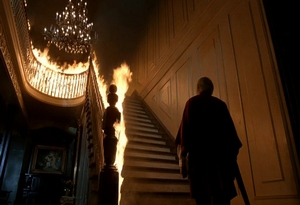
“The Changeling” came out in 1980 but it carries more traits of the seventies horror genre than the 80’s. A house that oozes sorrow and dark menace, a protagonist who is both flawed and appealing and a well crafted plot that relies on mood and detail more than gore and computer generated special effects. There are images from the movie that will stay with you long after you’ve seen it. The house itself is a vivid and integral character in the story as it essentially becomes the face and voice of the ghost haunting its walls. Much in the movie is left to our imagination with long disturbing camera shots of darkened stairwells and empty rooms and a effective lack of soundtrack that was indicative of the seventies style. In fact, the silence becomes as frightening as any ghostly sound emanating from the recesses of the house.
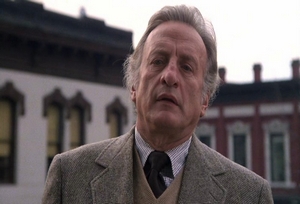
John Russell (George C. Scott) is a successful and well known composer with a beautiful wife and child. While on vacation, his entire family is killed in a freak car accident. Although beset with grief, friends insist he get back on his feet by taking a teaching position at a university in Seattle. Claire Norman (Trish Van Devere) helps him procure a house listed by the national historic society. Located in Chessman Park, a neighborhood known to the rich and powerful families of Seattle, the house has been empty for twelve years. The family that once owned it moved out for unknown reasons, but the last surviving member is a powerful and wealthy senator, Joseph Carmichael (Melvyn Douglas).
The house is enormous, with vast empty rooms even a grand piano, and seems to be the perfect place for John Russell to ruminate on his grief and heal. He soon discovers that he shares the house with a presence. Small noises, and whispers tease him almost playfully from the shadows and he is lured into thinking it may be nothing more than a childlike entity who is connecting with him through his own loss. Soon however, he begins to suspect that there is more here than just a friendly spirit seeking solace. He seeks out Claire Norman to find out more about the history of the house and through his research finds that a small child was killed in the street outside the house by way of accident. This he thinks is the spirit that haunts him. But upon investigating further he finds a saint’s medallion in the attic whose initials do not match those of the child killed.
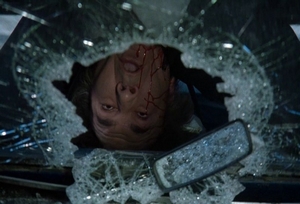 Meanwhile the noises in the house from banging water pipes to a child’s voice in the attic that cries out for help grow stronger, as if begging with John Russell to finish what he started. Frustrated he demands that the spirit give him a break, telling it he’s done all he can but there is no respite for him. Various effects that are simple but alarming intensify the mood and increase the feeling of dread in the film. This is where the mastery of the mind comes into play. This is a film that truly manipulates the imagination and brings anxiety and fear through what is suggested, not displayed openly.
In desperation, John and Claire decide a séance might be the only way to discover the truth. What it revealed is that not only was a child murdered in the house, but the body was discarded down a well that is now located on a part of the estate sold off when the property was divided. They are confronted at almost every turn with ruthless ego of Senator Joseph Carmichael who wants the past left buried forever.
The films pacing is not as feverish or fast paced as some horror films but with an intriguing storyline, thoughtful acting and the moody atmosphere, you don’t need it. George C. Scott makes for a rugged but appealing protagonist whose resolute determination to help the spirit of this murdered child, as if somehow he can help his own lost child, becomes an obsessive mission.
When John finds the missing well, he also finds a woman who is reluctant to believe his ghost tale, until her daughter has a truly frightening experience later that night. This is probably one of scariest moments in the movie. Here on, the movie’s pace spirals faster and the eventual discovery by John Russell of who was murdered and why is revealed with a suitable and satisfying conclusion.
There has been talk of doing a remake on this film, which initially caused varying degrees of controversy on various horror film internet fansites. Many feel that a modern adaption would rely heavily on computer generated effects which would greatly alter the minimalist appeal of the first movie. In the first one, the director left it for you to imagine what or who was lurking in the dark. A remake would undoubtedly feel that the modern mind is too lazy to utilize a vastly underused imagination and spoon feed us the horror. Recent reports are the director of the first film, hired for the second, quit once he heard they were going to add extensive computer generated effects. I can only hope they leave well enough alone and leave the ghosts in the attic as nothing more than the lurid conjuring of our imagination.
|  by:
by: