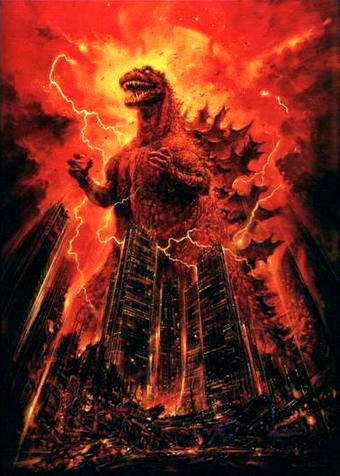

And here we go again. I hope you've enjoyed the first half of this little trip we've taken. This part of the Franchise will take a turn for the serious, with less comedic parts and darker tones. Also new monsters will become a rarity from here on out, as Toho does a Hollywood and take less risks. Physical battles will lesson, while beam and power battles will move up.
So, let's recap again. This whole thing started in 1954 with Gojira, a film about a dinosaur mutated by a nuclear blast off the coast of the Japanese Islands and wreaks havoc on the world. This was followed by the Showa Series, which started dark and went to a more light hearted style (see Article 1). The series then went to the kids as Godzilla was made into a hero who came to the rescue in some crazy and outrageous films (see Article 2).
Before we begin, it would be only fair to talk about Godzilla outside the Toho made films. Other media, which includes TV shows, games, books and music.
Other Media
In the 70's, Godzilla and other monster suits were often recycled for the show's Ultraman and Ultra Q. Most notable was when the Godzilla suit had a reptile frill neck on it. In Zone Fighter, Godzilla would be an ally for a few episodes to the Zone Family and fight along with them against the monsters. Gigan would be one of these monsters, and would use a weapon that wasn't used in his Showa films, a laser on his head.
In the late 70's, after the Showa era ended, an American cartoon started called "The Godzilla Power Hour". It would run on Saturday morning along with the cartoon Jana of the Jungle and had half an hour episodes. The basic premise of the show was 2 scientists, an assistant and a nephew of one of the scientists would go on adventures around the world exploring the unexplainable. Along for the ride was Godzooky, Godzilla's nephew who could fly but failed to have Godzilla's powers, which were altered from his usual breath to simple flame breath and laser eyes.
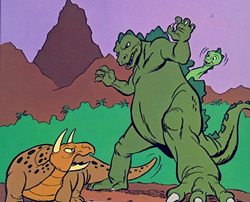 One of the flaws of the show was Godzilla would easily change in size. One scene would have his claw big enough to hold a ship, building or other massive object. Other scenes only minutes later would have his claw just the right size to hold the main characters. This show would last for 2 seasons before being canceled in 1980. None of the monsters from the main franchise would return, although a lot of usual monsters (giant insects or animals) and classic ones (mythical beasts) were Godzilla's opponents in the episodes.
The next TV show would be Godzilla Island which would run 3 minute episodes (similar to Clone Wars on Cartoon Network). Unlike the usual live action Godzilla films or shows, it didn't us Suitmation, what it would use was simple models with real humans. It ran for over 200 episodes.
The last and latest show would be Godzilla: the Series. This was a direct sequel to the 1998 remake. And unlike the remake, this would get praise by the fans who hated the film, due to it changing back the changes brought to Godzilla in the film (which will be saved for the last article). Like the last animated series, this show would feature a group of scientists (the main characters of the film) exploring the world for un-explained events with Godzilla helping. This would lead him to battle creatures and annoy the military who still saw him as a threat.
Despite the fans loving it, the show struggled as it was in the shadow of a war between Fox Kids with Digimon and WB Kids with Pokemon. This would cause its time to change constantly, making it hard to watch. It ran for 2 seasons before being taken off the air.
Godzilla would also be introduced into Books and Comics. Random House would release 2 book series. The first was written by Marc Cerasini, and his would be aimed for a more mature audience. Each had a unique and different plot, with Toho Monsters as the stars. The books are as follows:
Godzilla Returns (1996)
Godzilla 2000 (1997)
Godzilla at Worlds End (1998)
Godzilla vs. the Robot Monsters (1998)
There was a final book that was written, Godzilla and The Lost Continent, but Random House lost rights and it never made shelves.
The next book series was written by Scott Ciencin and was aimed for younger readers and again featured Toho Monsters. They are:
Godzilla (1996)
Godzilla Invades America (1997)
Godzilla, Journey to Monster Island (1998)
Godzilla vs. the Space Monster (1998)
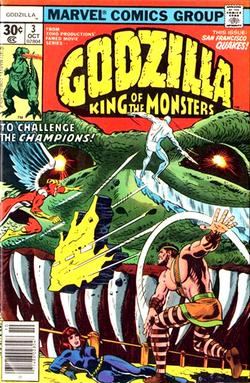 Both Marvel and Dark Horse Comics would get rights as well. Marvel made several comics that had Godzilla face off against S.H.I.E.L.D., the Avengers and other well known Hero's. Dark Horse would produce several comics as well which had Godzilla being sent through time by his enemy to cause the world's disasters (1906 San Francisco Earth Quake, the Titanic, etc.).
Godzilla has had an affect on the music world as well. Blue Oyster Cult would make a direct song about him simply titled "Godzilla", as would Lostprophets with "We are Godzilla, You are Tokyo" and Groovie Ghoulies "Hats off to you (Godzilla)". Professional wrestler Samoa Joe has his theme for his entrance in TNA wrestling. Death Metal group Gojira also got there name from the famous monster.
Finally, there are of course the video games. They've spanned over the years and over the systems. The most famous ones are:
Godzilla: Monsters of Monsters (NES, 1989)
Godzilla (GB, 1990)
Godzilla 2: War of the Monsters (NES, 1992)
Super Godzilla (Super NES, 1993)
Godzilla: Destroy All Monsters Melee (GC, Xbox, 2002)
Godzilla: Domination (GB Advanced, 2002)
Godzilla: Save the Earth (PS2, Xbox, 2004)
Godzilla: Unleashed (Wii, PS2, 2007)
As I said, they're the most famous. There are others on other systems that didn't make it out of Japan or the system weren't the most successful. Go exploring and you might find some.
Now that we got the media out of the way, it's time we return to the series. The Heisei Series started in the mid 80's. After Showa went out of control, Toho decided to give Godzilla a clean start and forget about everything between the first film and the original. Godzilla would start out as the main antagonist in the first 2 films and slowly move to the roll of Anti-Hero, with humans allowing him to help, but never really wanting him there.
These films would also start a streak that's the longest running in Godzilla history. Anyone who's seen the films have clearly seen that Toho brings in actors to play numerous roles, film after film. Occasionally, they would reprise the roll they played before in a later film, but vary rarely and with very few characters. This would change however in Heisei as Megumi Odaka would start a role and replay it in nearly every film in the era.
So let's begin.
The Heisei Era
The Return of Godzilla (1984)
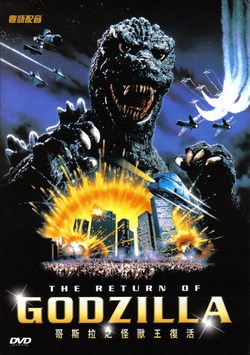 Monsters - Godzilla, Shockirus
Lowdown - As I said above, this film was a reboot and a 30th anniversary film. The goal of the film was to return to the roots of Godzilla, as evident by the horror like soundtrack and more bloody scenes. Also returning is a strong anti-nuclear message as the film features tension of the Cold War and the Prime Minister enforcing Japan's stance on nuclear options. Raymond Burr, who played Steve Martin in the American cut of the first film also returned for the American release, dubbed "Godzilla 1985". While the Shockirus is a new monster, and plays a large part of the story, it's only in 1 scene.
The story of this reboot begins with a fishing vessel struggling in a storm and coming close to some rocks. The fisherman watch the horror as the rocks rise up and a roar is heard. Days later, reporter Goro Maki comes across the ship while sailing and discovers that all the crewman are dead, killed by a giant mutated sea lice called Shockirus, which also nearly kills him. He discovers Hiroshi Okumaru, the last survivor, and upon their return, the man tells of Godzilla's return. When the government makes Maki keep his mouth shut on what happened, he won’t let go, and finds Professor Hayashida, a native survivor of Godzilla 30 years ago and also finds that Hiroshi's sister works for him. They then slowly unite as Godzilla not only heads for Tokyo, but causes trouble that increases friction between the US and USSR.
The film garnered huge praise when released, and was an instant hit. Fans loved the return to the heartless beast roots and made Godzilla a truly bone chilling monster again (the scene where he's standing with read light on him after defeating the Super-X for instance). Not all acting is up to par, but it's enough. Some of you who are old enough might have remembered Godzilla 1985 as a theatrical release. This version got the exact opposite reception, as it had strong product placement (Dr. Pepper) and cheesy American dubbing. Steve Martin's character was turned more into the Wiseman character, as he gives lectures to the generals and is skeptical of success, another thing not liked. Most notable was the change to where it made the USSR look bad (a character trying to stop a nuke was changed to trying to launch it), mainly because of the Cold War.
Godzilla vs. Biollante (1989)
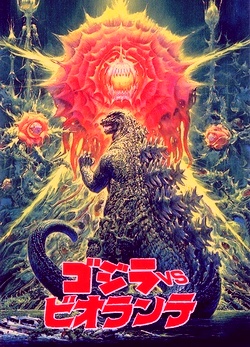 Monsters - Godzilla, Biollante (Plant, Final form)
Lowdown - This film is unique in its creation. It was made when Toho put up a script contest for the next Godzilla film, and this film, made by a Dentist, won (The runner up, Gunhed, got its own film, but didn't impress fans). This film introduces new monster Biollante, a plant monster. This also is the movie that introduces Miki Saegusa, a character that would return from here until the end of the Heisei Era (See above).
The story takes place right after the last film ended, with multiple factions from different countries fighting over some Godzilla cells (Japanese, American and Middle Eastern) in the ruins of Tokyo. In the Middle East, a Japanese Scientist named Genshiro Shiragami and his daughter Erika begin work on the cells, but a terrorist attack meant to stop the research kills her. 5 years later, Shiragami is back in Japan, now focusing his study on Psychic Connections to Plants. Meanwhile, Godzilla in his earthly prison is closing in on escape. Preparing to make an anti-nuclear weapon to use on him, the government gets Shiragami on the case involving Godzilla’s cells, but he also uses them along with plant cells and Erika's cells to make a new monster, Biollante.
Now….if you asked any random Godzilla fan what there absolute favorite Godzilla film was, myself included, they'd most likely say this film. They'd agree it wasn't the best, but they'd say it was still they’re top film. The suitmation by both Godzilla and Biollante is some of the best ever, as well as the use of James Bond like themes of corporate greed and international feuds. This is easily the high point of the era and not to be missed.
Godzilla vs. King Ghidorah (1991)
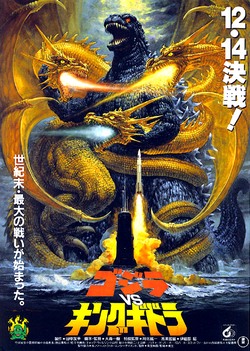 Monsters - Dorats, King Ghidorah, Mecha-King Ghidorah
Lowdown - And what comes up, must come down….as this era does now. Despite the rave the last film got, it didn't make the money the execs wanted, and so they took the easy way and went back to an established monster, King Ghidorah. They also went from original to what's been done before, as this one is a far more sci-fi like and simple plot.
The plot is that during the early 90's, people of the future arrive in a large UFO like ship offering to help Japan from the problems to come. Two westerners, Wilson and Grenchiko, and a Japanese woman, Emmy, come warning of the destruction Godzilla will wreak in the coming years. They seek the aid of a man named Terasawa, the writer of a well informed Godzilla book, as well as Professor Mazaki, who helped him write it, and Miki Saegusa. They wish them to come with them to the 1940's where Godzillasauras was first seen by Japanese solders and who then saved them from American invaders. Their plan being to teleport it somewhere else to stop it from being hit by radiation. However, while back there, they release some animals made in the future called Dorats, that later turn into King Ghidorah, and it's learned that the future isn't as it was described.
The execs got what they wanted as this film was a financial hit…however, it angered fans as well. The storyline was basic sci-fi, only it didn't even try to be logical on some aspects. Miki Saegusa also had little to do in this film. It also set up a Paradox for the following films, as the events of Godzilla vs. Biollante, Return of Godzilla and the original 54 Godzilla shouldn't have happened, but are remembered by everyone. The one saving grace is the battle between Godzilla and King Ghidorah, then later Mecha-King Ghidorah (a mechanically improved version of him), but it isn't much.
Godzilla vs. Mothra (1992)
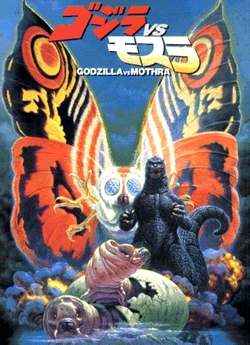 Monsters - Godzilla, Mothra (Larva), Mothra (Adult), Battra (Larva), Battra (Adult)
Lowdown - Fallowing on the theme of using what worked, Toho decided to bring back another of there most prized creations, Mothra. The Shojobin return, but this time are called the Earth's Cosmos. Also introduced is new monster and Mothra's rival, Battra, which is a more evil version of Mothra.
The film starts after a meteor crash lands in the ocean and awakens both Godzilla and Larva Battra. It also causes typhoons and storms which uncover an egg on a local island. After the weather calms, the Prim Minister visits Takuya Fujita, a man in prison for robbing from preserved ruins, along with his ex wife Masako Tezuka and Kenji Andoh, a secretary for a big business. They offer him a chance to join his ex and the secretary on a trip to the island in exchange for freedom. He agrees after they tell him they extended his sentence more than what he thought. There, they discover a giant egg and the earth Cosmos, and are informed of the dangers now that Battra has awakened, not to mention the addition of Godzilla.
Just like the last film, they wanted more cash then love, and they got it even more here. The film was Heisei's more successful film, and also one of the most loathed by fans. Miki Saegusa is pretty much in the background through out this film and barely does anything. The props for Battra and Mothra are also lacking, as a common trait in the Heisei flying monsters is them flying with barely any wing movement. They also altered Mothra from what she once was, a tooth and claw monster, to one with powers. Some fans didn't like this. I maintain that Battra in Larva stage was more dangerous then his adult stage, and bigger. Remember how I said in the last article that Toho steals from famous western films? It happens here as it does a clear as day rip off of Raiders of the Lost Arc. The films success would later let Mothra have a Spin off Trilogy aimed strait for kids…and its kids I recommend it too.
Godzilla vs. Mechagodzilla (1993)
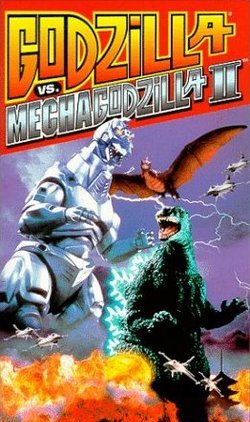 Monsters - Godzilla, Mechagodzilla, Rodan, Baby Godzilla, Mecha-King Ghidorah, Mothra (Stock Footage)
Lowdown - Again, they used what was loved. This time they brought back 2 favorites, Rodan and Mechagodzilla. They also added a new comer, Baby Godzilla. While you might be thinking of Minilla from the Showa Era, Baby Godzilla is different as it's human size and not so slap stick comical. One other change added was, like Mothra in the last film, Rodan wasn't a tooth and claw monster anymore, as they gave him an atomic breath of his own.
The story for the film is that Japan, tired of Godzilla, decides to make the ultimate weapon to stop him, and when the failed Super Jet Garuda it shelved, they then recover Mecha-King Ghidorah's remains and use them to make Mechagodzilla. Due to Garuda's shelving, its main scientist (a dino nerd) is forced to join G-Force which he fails miserably at. Meanwhile, a group of Scientists go to a southern island and finds a nest with an egg, protected by Rodan, Godzilla also comes and a battle ensues. When they get back, the egg hatches to release Baby Godzilla, and now the characters must figure out whether they agree with the plans laid out for Godzilla and his offspring.
This film is viewed by most as one of the better films in Heisei, despite its flaws. Miki Saegusa plays a more important role this time and goes through a major character change as well as she starts to wonder about what she's strived for with Godzilla. Rodan's SFX are rather lacking, but Godzilla and Mechagodzilla are both still impressive, even though this incarnation of Mechagodzilla is easily the weakest of the 3.
Godzilla vs. SpaceGodzilla (1994)
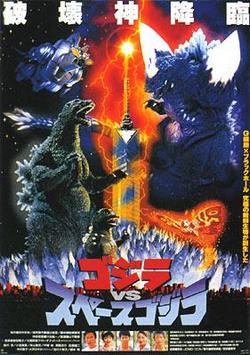 Monsters - Godzilla, SpaceGodzilla, Moguera, Little Godzilla, Mothra, Fairy Mothra, Biollante (Stock Footage), Battra (Stock Footage)
Lowdown - Like every other Godzilla film that came on the 4th year of the each decade, this film was meant to be an anniversary film. For it they decided to make a new monster and one of the most powerful ones to date: SpaceGodzilla. Moguera may look new, but it's actually from a past non Godzilla film called The Mysterians, where it was used by alien invaders as a giant robot to kill humans. Little Godzilla, now larger and a little Minilla like, is more comical and barely plays a part in the story. Mothra and its Fairy helper only serve to warn Miki Saegusa.
This film starts with 2 projects designed for Godzilla. Project T involves Miki and her using her telepathy to control him. Project M has the Government building Moguera, a giant robot, to attack and kill him. Things go south however when Earth's defenses discover something huge and alive is heading for earth and discover it's just like Godzilla. To make matters worse, someone in the Project T group has a personal grudge against Godzilla for killing someone from his past and plans to kill him. Upon discovering SpaceGodzilla's origins (Either a part of Biollante or Godzilla's flesh on Mothra), they decide that SpaceGodzilla is the real threat.
The movie is a real mixed bag. Some of the acting is viewed as great, while others are just bad. Miki Saegusa, despite playing another vital role, is turned Damsel in Distress halfway through. Some of the SFX are also both ups and downs. A space battle between SpaceGodzilla and Moguera is laughable. At the same time, some of the fight scenes are action packed and doesn’t disappoint.
Godzilla vs. Destoroyah (1995)
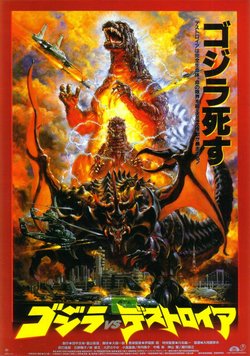 Monsters - Godzilla, Destoroyah (Micro, Juvenile, Aggregate, Flying, Final form) Godzilla Junior
Lowdown - This film would be a lot of lasts. It would be the last time actress Megumi Odaka would appear on screen (the same with her well known Miki Saegusa character), the last time Momoko Kochi would appear in a film (she reprised her famed Emiko roll from the original Gojira) before her death and the last time the Godzilla series would have a strait continuity (as you'll see in part 4 of this series of articles). This will also mark a second in Godzilla history, as it's the second time ever that Godzilla has died.
The final story for Heisei is that Godzilla has consumed a huge amount radiation after a nuclear meltdown, and has grown even bigger now, with red glowing skin and an even more powerful heat wave. G-Force gets a young college drop out and Godzilla specialist named Kenichi Yamane, adoptive grandson of Dr. Yamane and brother to famed reporter Yukari Yamane. Along with Godzilla, he also helps Miki Saegusa who's desperate to find the missing Junior Godzilla. Meanwhile, Yukari has been covering a scientist who's made a break through with Micro Oxygen. But later on, his tests of the area have discovered that the Oxygen Destroyer mutated Pre-historic life forms in the soil and they have now evolved. Between the creature dubbed Destoroyah growing and evolving at a terrifying rate, Kenichi figuring that Godzilla will die soon but cause enough destruction to bring the world to an end and with Junior Godzilla now an adult, the race is on to solve the problem before Doomsday comes.
This is easily one of the most emotional films in the franchise, and another high point of the Heisei series. It's viewed by most as one of the favorites of the series, between Godzilla finally meeting his demise and the last appearance of Miki Saegusa. Also rather sad was that the film made Dr. Serizawa's sacrifice in the original for nothing, as it was his creation that birthed a monster just as destructive as Godzilla. One thing that was pointed out though is that Toho again ripped another film from the west as a scene between Destoroyahs in Juvenile form battle Special Forces police, as it resembled Aliens when the marines battled the creatures (as does there tongues, it resembles the Alien second mouth.
So there you have it, the end of the Heisei Era. It ended in a way that it could be started up at any time and continues where it left off…but something happened and Toho felt the need to reply with a Vengeance for the fans. That was the 1998 Remake, and that tempted Toho to respond by starting the Millennium Era, which can be one of the most confusing ones ever. But, that's for Part 4, our final outing. So, until next time, farewell.
|
 drew
drew