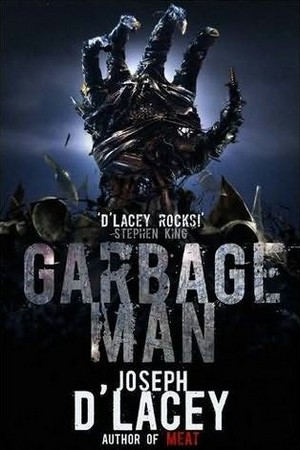

Shreve is as nondescript a town as you could mention; a small, lifeless place where the kids dream of escape and the adults wonder what the hell happened. It's a town literally built on rubbish, its only notable feature being a landfill site that's among the biggest in Britain. But unbeknownst to the populace at large, something most remarkable is going on in this most unremarkable place. The garbage being haphazardly discarded in the earth is no longer staying buried; in fact, it is attaining consciousness. And soon enough, it seems the life form born of human waste may want to take humanity's place at the top of the food chain.
While it's a painful cliché to compare every new horror writer on the block to Stephen King, this is one instance where such comparison is actually appropriate. Like King, Joseph D'Lacey is every bit as interested in painting a vivid, lifelike picture of a community as he is in putting the shits up the reader. By showing us day-to-day existence in Shreve through the eyes of numerous protagonists, the reader gets a palpable sense of life in this dead-end place. These are all well-rounded, believable, empathetic characters, none of whom take precedence or attain definitive 'lead' status. One might regard the central character to be the enigmatic hermit Mason Brand, as it is his unconventional relationship with nature that sets the tale in motion, but the reader is perhaps more likely to identify with the numerous suburbanites going about their lives, working in dull jobs, playing video games, getting stoned, screwing around, spying on their neighbours. The mighty landfill of Shreve is not only central to the plot and the environmental drive of the tale; it also serves as a metaphor for the rotten goings-on under the surface, behind the curtains of the outwardly uneventful town. And as with King's best work, once we are absorbed in these characters, walking through a world we recognise as not too dissimilar to our own - that's when the shit really hits the fan.
 Joseph D'Lacey. That's a lot of teeth.
All this might come to nought, however, if the reader is not able to take Garbage Man's central conceit seriously. Of course all supernatural horror requires suspension of disbelief, but the idea of trash coming to life may at times feel just a little too absurd to be scary, particularly once so much work has gone into realistically establishing the people of Shreve. But this is a minor quibble, and D'Lacey is smart enough to keep things in check. The building dread of the first two thirds of the book leads to a storming climax, the various story threads crashing headfirst into one another in a desperate fight for survival. It's a familiar scenario, for sure, but D'Lacey's prose is powerful enough to keep it fresh and involving.
This is Joseph D'Lacey's second novel, and much like his debut Meat it deals with contemporary environmental fears, which might lead to his work being labelled 'eco-horror.' It should be stressed, however, that while D'Lacey's writing is informed by anxieties about how we're treating our planet and exudes subtle whiffs of a new age spirituality, this is by no means tree-hugging fluffy bunny fiction. This is real horror. D'Lacey speaks bluntly, never sugars the pill, and knows just how to hit the reader where it hurts when it counts.
Meat announced D'Lacey as an author to watch - Garbage Man establishes him as one of the best horror writers to come out of Britain in recent memory. Make sure you don't miss this guy.
|
 ben
ben