|
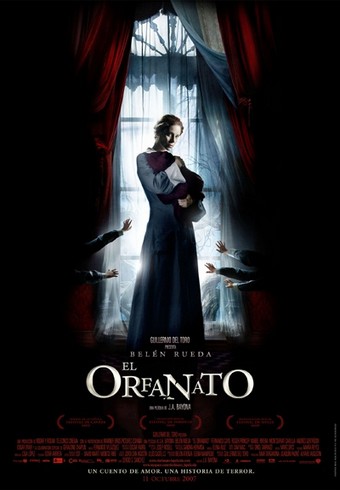
The Orphanage (2007)
Starring Belén Rueda, Fernando Cayo & Roger Príncep
Directed by Juan Antonio Bayona
Written by Sergio G. Sánchez
|

Horror movies can take many paths to frighten us. They can utilize special effects that show us gore we never really want to see, especially in real life. They can even create monsters that show us the dark side of the soul through make-up and movie magic.
But all these effects are nothing more than smoke and mirrors, instilling fear through hype. The true art of a well crafted horror movie digs deep into the human psyche asking the questions that we dread answering. What are we really afraid of? What is it that haunts the dark corners of our souls that can terrorize us with nothing more than, what if?
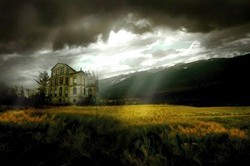 There are ghosts and there are monsters in every life, but there is nothing more frightening than what is buried inside us. Each answer is unique to the person who asks the question.
In The Orphanage just such a question is answered for the characters in such a disturbing and haunting manner that it will resonate in the viewer for a long time to come. I confess that this movie was just so poignantly haunting that I lay awake in bed for hours after I watched it.
Laura (Belén Rueda) is returning to her childhood home, the orphanage where she was raised until being adopted at the age of 12. She and her husband, Carlos (Fernando Cayo), are bringing their son Simón (Roger Príncep) to the old house by the sea to help him stay healthy, as well as starting their own home for children who are developmentally disabled. They are barely in the house a day when Simón has found a new imaginary friend (always a bad sign in any horror movie) who seems to know far more about the family than Laura is comfortable with. The house creaks and sighs mysteriously around them, even as Tomas (Oscar Casas), the imaginary friend who is something far scarier, reveals secrets to Simón that will tear the family apart. Including the fact that Laura and Carlos are not Simóns natural parents and he is in fact, infected with HIV. The revelation of both to Simón causes an immediate tragic rift in the relationship between Laura and her beloved son. Simón disappears after a fight with Laura shortly thereafter. After frantically searching the house for Simón, Laura is attacked by a child wearing a sackcloth over his head and an old uniform from the orphanage days. No one else sees the strange child but despite their disbelief, Laura remains convinced this child had something to do with Simóns disappearance. At this point the strange events in the house take a turn for the worse.
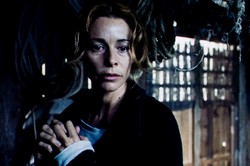 Later that night Laura hears a strange banging from somewhere deep in the bowels of the house, and is convinced that her son is somewhere being held hostage by his imaginary friend. Days pass and there is no sign of her son, yet she continues to search desperate for the truth.
Laura and Carlos, stricken with grief over the loss of their son spend months seeking answers and all the while the house settles around them like a mourning shroud. Laura's obsessive determination to find her son pushes the boundaries of her husband's patience as he cannot accept that there is anything otherworldly at work in the events surrounding Simon's disappearance. Laura fights to keep her sanity even as she uncovers the vile secrets of the house and what happened here to the friends she left behind. Something is reaching out from the other side and Simon has become its casualty. She eventually seeks the help of a psychic providing one of the truly most terrifying and memorable scenes in the movie. The psychic will give her a piece of advice that becomes pivotal to the movie, "Only you can decide how far you are willing to go to find your son." It strikes at the heart of any mother, a fear that is born the moment she has a child. What would you do, what terror would you endure for the sake of your child?
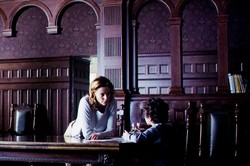
When Carlos reaches his limit of being able to endure the house he begs Laura to leave with him, but she cannot. Instead she asks for three days to say her good-bye to her son. Once left alone, she enacts the plan she has for finding her son. She will implore the ghosts of the children murdered in the house to bring her son back to her, at any cost. What she will finally discover, buried in the heart of the house, will be the end of her search. The ending is frighteningly heartbreaking as is the final sorrow of this film. Yet, one cannot say that the end is truly sad as much as bittersweet. Because in the end, the true horror is the consequences of the choices we make.
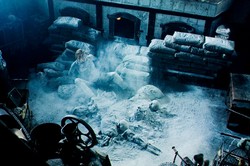 What worked especially well in this film was the brevity of dialogue that let the setting and the characters emotional lives play out fully. The simplistic but eerie sound effects were extremely effective in showcasing a house that is full of shadows and memories. The characters are well drawn and exceptionally acted. Laura is a real life character, played with passion and charisma. It was nice to see a heroine who isn't twenty something and big breasted with no investment in the reality of her character. Perhaps that's something to do with foreign directors; they tend to lean towards actors with story credibility and depth of emotion. Her husband is not the usual bland, boring pedantic disbeliever but genuinely sympathetic and believable. You feel for these characters and if you are a mother, you will definitely feel Laura's heartache for her lost child.
Long after the last scene has faded what lingers is this, what haunts us the most is the split second decisions that can tragically change your life forever. We may seek to blame the spirits of the dead for our present sorrows, but that is a fallacy. It is our inability to alter the course we have set for ourselves that is ultimately more terrifying than the ghosts of our past.
|  karyne