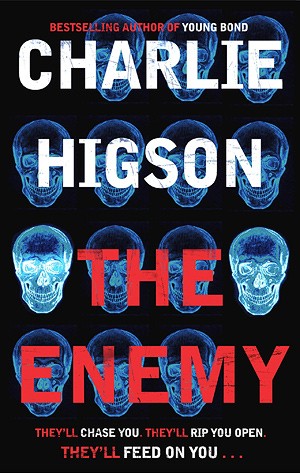
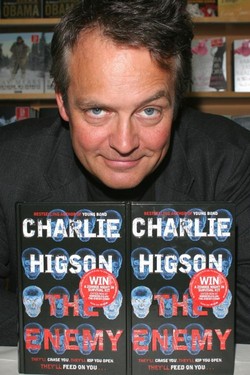
Charlie Higson is one of those people who stands as living proof that you can’t always predict a career trajectory in advance. Starting out playing in a punk band that no-one’s ever heard of, he found recognition through TV comedy working first with Harry Enfield, then as part of The Fast Show (or Brilliant! as I believe it’s called across the Atlantic), one of the finest, most irreverent UK sketch shows there has ever been. As far as the masses were concerned, the first evidence that he had a dark, serious side came when he wrote the remake of Randall & Hopkirk: Deceased for Vic Reeves and Bob Mortimer, a surprisingly deadpan and creepy take on a bizarre premise (for those not in the know: private detective duo, one of whom is a ghost). However, unbeknownst to most Higson also had a concurrent career as a novelist, penning a number of savagely pessimistic crime novels, one of which he adapted into a screenplay for what became one of the best films of Stuart Gordon’s career, King of the Ants. And from there, somehow, he got picked by the Fleming estate to pen the now massively successful series of Young James Bond novels.
So where else can one go from there, except to writing what I assume is the first zombie novel for kids?
Given the proliferation of zombie lore pumped out over the last decade, it’s in some ways surprising that no-one has yet come up with Higson’s premise for The Enemy; somewhere between Battle Royale and I Am Legend. Yet at the same time it’s little wonder that no one has gone there before now. It’s certainly not a premise that you could see being done on film, and I should expect it’s not one that will prove popular with some parent and teacher groups. For in the nightmarish alternate Britain that Higson has created, the situation is – drum roll - everyone over the age of fourteen has become a zombie.
Rather than detailing the start of the crisis, Higson throws us headfirst into the fledgling society that the kids of London have built for themselves; forming packs, living in abandoned supermarkets. Our protagonists are the kids that live in Waitrose, lead by Arran and Maxie. They’ve managed to form a decent stronghold for themselves, but have lost more than a few of their number along the way, and can’t help wondering if there might be something better out there. Soon enough, a curious youngster in a patchwork coat appears and informs them that such an alternative does exist; an idyllic collective with fresh food and a harmonious existence, based in Buckingham Palace of all places. Knowing it sounds way too good to be true but fearing a life of self-imposed imprisonment, Arran leads his children out to see this supposed utopia for themselves. But there’s no way they can reach the palace without more than a few run-ins with the Grown-Ups, and more than a few innocent deaths along the way.
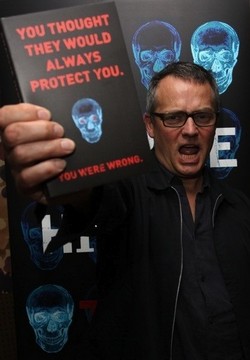 So essentially what we have here is a novel in which all grown ups are ruthless, single-minded predators, and the children have no one to protect them but themselves. And protect themselves they do. Ordinary kids become hardened, efficient fighters, armed with bats, knives, slingshots, even crossbows. When the Grown-Ups attack the kids fight back with all they have, and Higson does not hold back in detailing the carnage. We don’t have any Captain Rhodes moments here, but nonetheless plenty of brutal battle scenes that wouldn’t look out of place in an adult horror novel. There are deaths and dismemberments aplenty, child and grown-up alike.
It’s in the quieter moments that we remember this is a kid’s novel. Higson seems to have a pretty good handle on the way today's youngsters talk and think, painting a pretty believable portrait of what would become of all those wayward little brats in a world completely free from adult supervision. But just as many will doubtless accuse the author of irresponsibility for painting such a bleak worldview in a book for children (and bleak it is, much of the nihilistic anxiety of Higson’s adult fiction still present with very little dilution), there will surely also be those that think he didn’t go far enough, insofar as these kids have not gone feral. There’s infighting, but not much beyond ordinary schoolyard rivalries; there are hints of romantic longing, but sex itself is only briefly and very gently alluded to. These are still by and large very young kids, and while they have been forced to grow up quick inasmuch as they have to look after themselves and fend off danger, they’re still just kids underneath it all, and innocence has not completely left them. It makes for some haunting juxtapositions, our protagonists battling for their lives on one page and worrying about their social status on the next, all of which reaches a head when – as is so often the case in these tales – it becomes apparent that the zombies might not be the biggest threat they face.
 It may tail off a little by the end – as seems to be the norm these days, this is intended to be the first novel in an ongoing series, and as such lacks a definitive, satisfying conclusion – but by and large The Enemy really works. And I should imagine it to be pretty scary for most readers, young or old. Kids are likely to be freaked out by the monstrous adults, while adults will be freaked out by the notion of defenceless kids having to protect themselves from those monsters. All manner of subtexts abound, such as adult fear of youth violence, childhood fear of adult authority, and a whole new dimension to the anxieties of adolescence; after all, the kids still don’t know whether once they mature past 14 if they too will turn zombie. Plenty of questions remain by the end, leaving ample room for further exploration. While I’m not exactly frothing at the mouth for the follow-up, I’m certainly curious to see where the story goes next. The Enemy doesn’t revitalise the literary zombie the way Brian Keene’s The Rising did, but it’s a respectable addition to the genre, and if it results in a generation of young ‘uns falling in love with the living dead – leaving a slurry of sleepless nights and wet beds in its wake – then that can only be a good thing, right?
|
 ben
ben