|
|
|
|
|
|
|
|
|
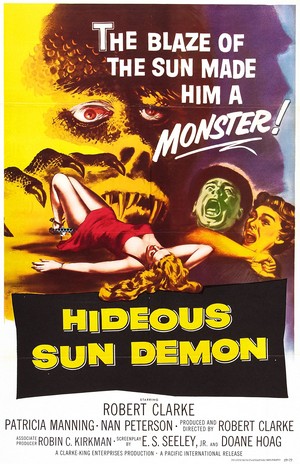
The Hideous Sun Demon (1959)
Starring Robert Clarke, Patricia Manning, Nan
Peterson, Patrick Whyte & Fred La Porta
Written by E.S. Seely Jr., with additional dialogue
by Doane R. Hoag, from an idea by Robert Clarke
and Phil Hiner
Directed by Robert Clarke and Tom Boutross
Produced by Robert Clarke
|

Ah, radiation. The great boogeyman of the 1950s. Following the Trinity Test at White Sand Proving Ground in New Mexico in 1945, atomic energy was something of a double-edged sword in the mind of the American public, both the tool that brought an end to the War in the Pacific and a means for cheap, "clean" power, but at the same time, capable of wreaking untold havoc on living tissue. While the Trinity explosion of 1945 marks the birth of the Atomic Age, it was "Ivy Mike," the first hydrogen bomb, tested in 1952, which marked the birth of the Age of Atomic Monsters. A year later, the film The Beast from 20,000 Fathoms was released, featuring the "Rhedosaurus," a dinosaur whose suspended animation in the Arctic was interrupted by nuclear testing.
From that point on, radiation was one of the prime go-to means of bringing a monster to life on screen. If it wasn't from outer space, it's a fair bet it was spawned in the fires of atomic fission. Mutant monstrosities of every shape and size (usually very large) capered across the silver screen. One of the more interesting conceptually, if you ask me, is the titular horror of Robert Clarke's The Hideous Sun Demon.
SYNOPSIS
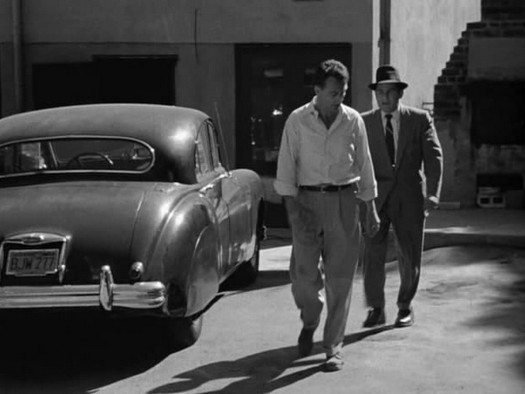
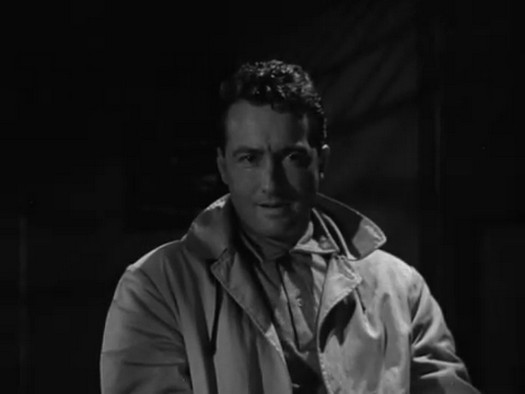
Warning klaxons blare and lights flash - a horrible accident has occurred in an atomic research facility near Los Angeles, California. One of the scientists, Gil McKenna (Clarke) is bathed in radiation for several minutes before pulled to safety and rushed to the hospital.
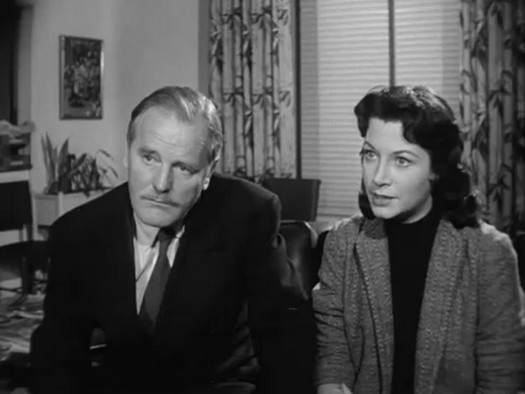
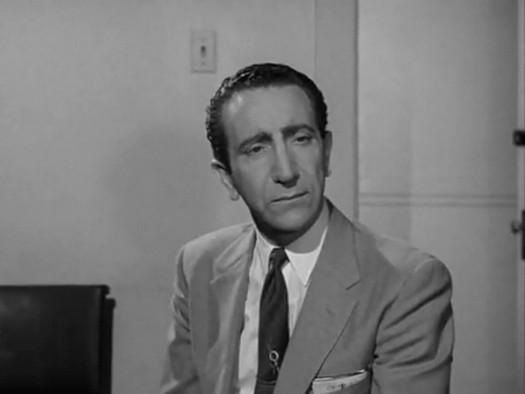
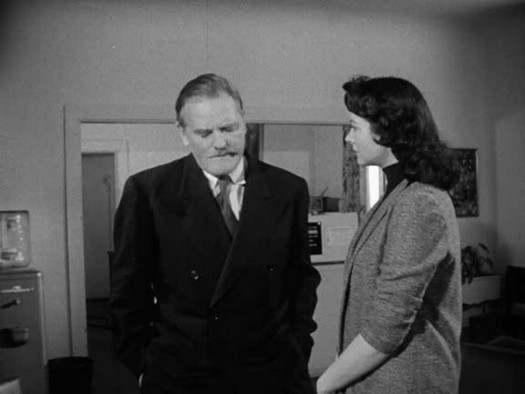
Dr. Frederick Buckell, McKenna's superior, discusses the matter with his attending physician, and reveals that the isotope whose rays McKenna had received was artificial, never having existed in nature. He also reveals, in calmly discussing the situation with McKenna's assistant (and apparent schnoogie-woogums) Ann Russell (Manning) that the accident is McKenna's own fault - McKenna was hung over on the job! "Whiskey and soda mix, not whiskey and science!" Buckell moralizes.
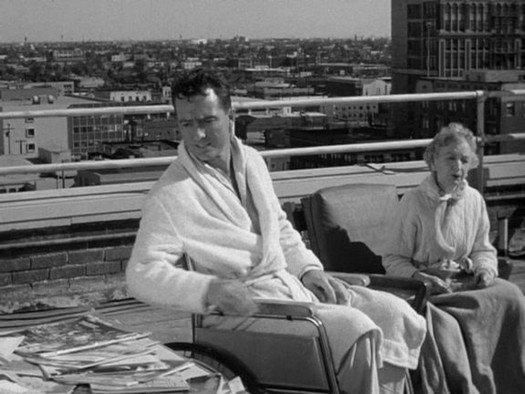
A thorough inspection shows that McKenna seemingly suffered no ill effects from his radiation-bath, and he's quickly in high spirits, flirting with the nurses. Everything seems fine, until McKenna is taken to the hospital roof for some sun and "airing out."
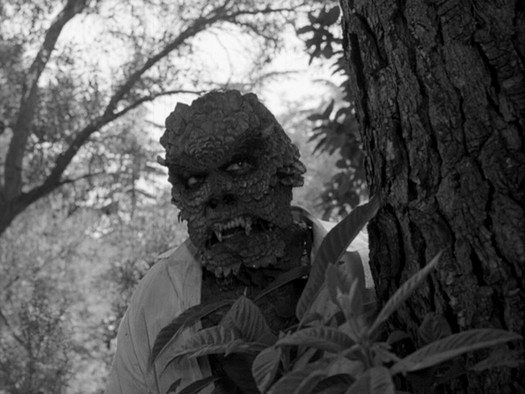
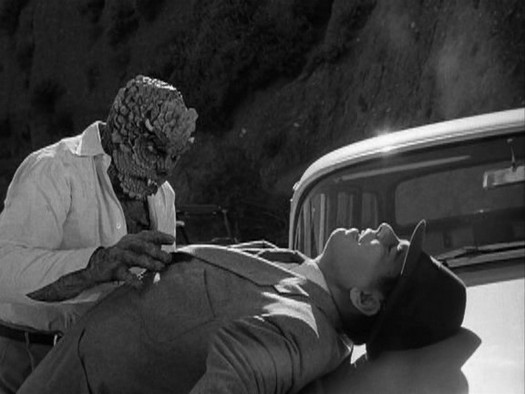
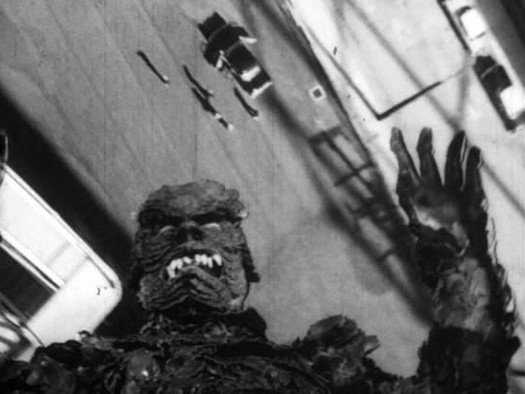
Exposure to sunlight causes Gil McKenna to turn into a scaly, lizard-like beast. Putting him in a dark room causes him to revert to normal. It seems the radiation he was exposed to has altered his cellular chemistry so that when in the presence of a catalyst (i.e., sunlight) he evolves backwards into a bloodthirsty lizard-man. How does this work? Well, in evolutionary biology there's a nifty phrase, "Ontology recapitulates phylogeny." What this means is that as an embryo develops, it passes through stages resembling "lesser" animals. A fish-like stage gives way to a reptile-embryo stage, then a mammal stage, then finally developing into a human infant. Gil McKenna, in the presence of sunlight, repeats the process in reverse.
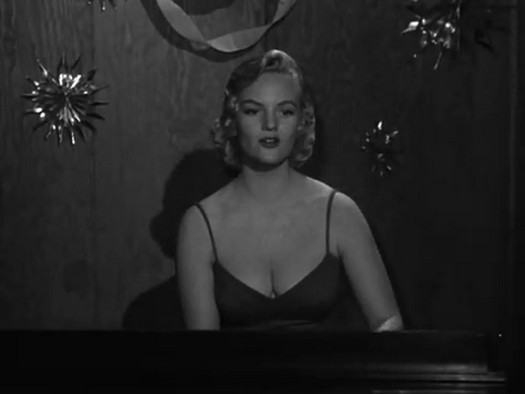
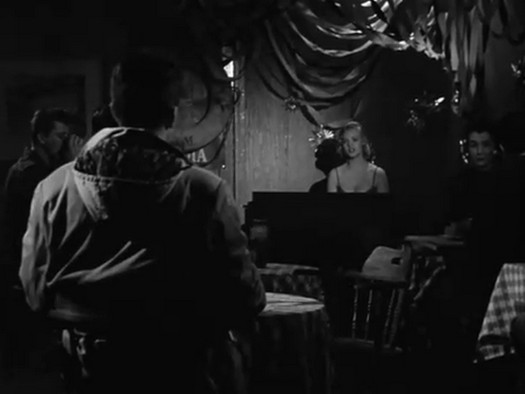
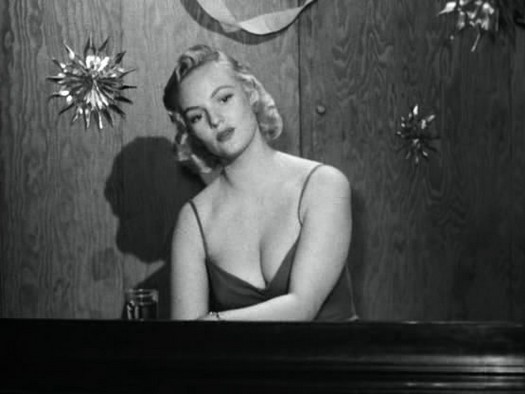
McKenna sets himself up in an old house, hiding like a recluse while trying desperately to find a cure for his condition. At night, he emerges, finding his way to an old dive bar to drown his sorrows. Here, he meets Trudy (Peterson), a top-heavy blonde floozy, newly separated from her gangster beau, George.
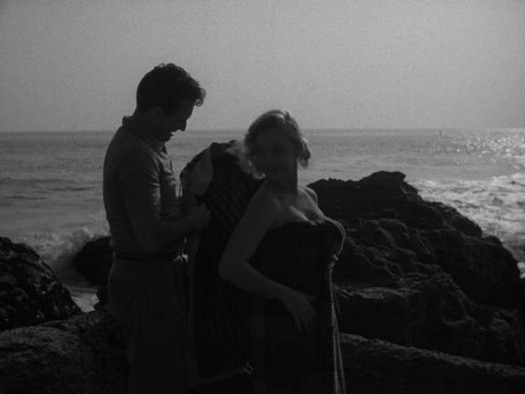
They spend the night on the beach, drinking and "frolicking" in the surf before falling asleep on a blanket. McKenna wakes as the sun rises, and runs off to the darkness of his basement, leaving Trudy to hitch a ride back to town half-naked.
Dr. Buckell and Ann want to help McKenna, but he's become defensive and aloof, refusing their help, preferring to wallow in self-pity over his condition. He returns to the bar, where George and his goons beat the hell out of him, in a fight that was not entirely choreographed - it looks like Clarke's head hits that hanging lamp for real, and real hard. Experiencing second thoughts regarding her hatred for McKenna, Trudy intervenes and takes him home to nurse him back to health.
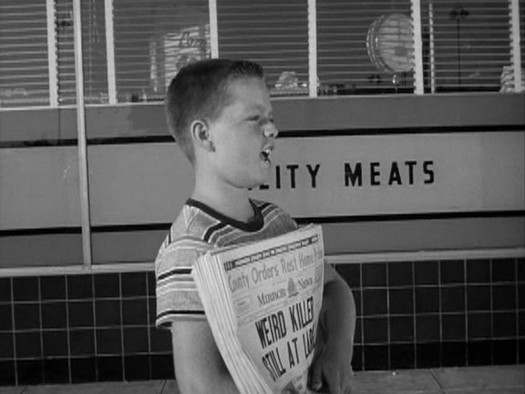
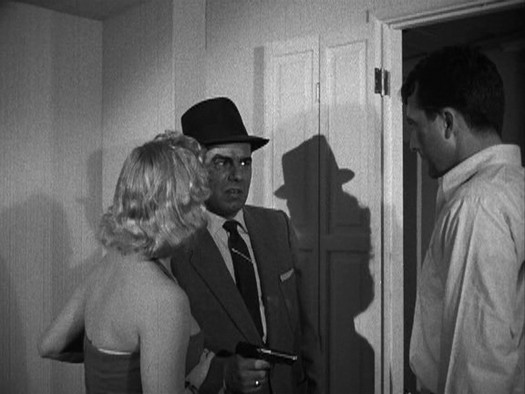
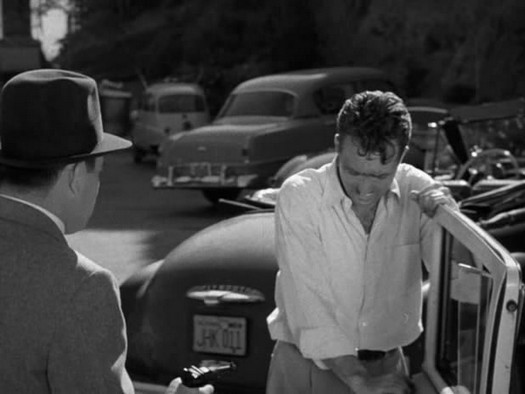
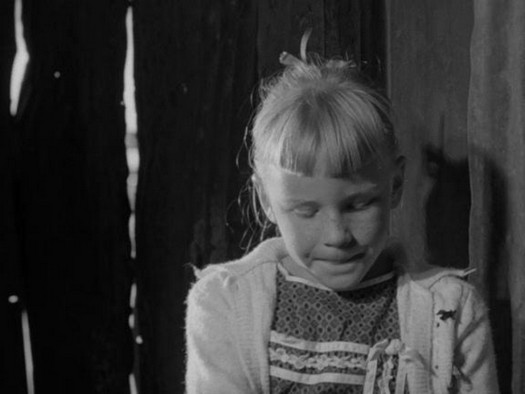
George shows up at her apartment, marching McKenna outside at gunpoint, where the sunlight turns George's gun from a Colt 1911 to a Luger, and McKenna from a wimpy, handsome scientist into a ravening lizard-man. With George dead, McKenna goes on a rampage across the bleak landscape of the Los Angeles oil fields. He terrorizes women and children, tears apart a German Shepherd, and while hiding in a shack, befriends the most irritating child this side of the Gamera franchise.
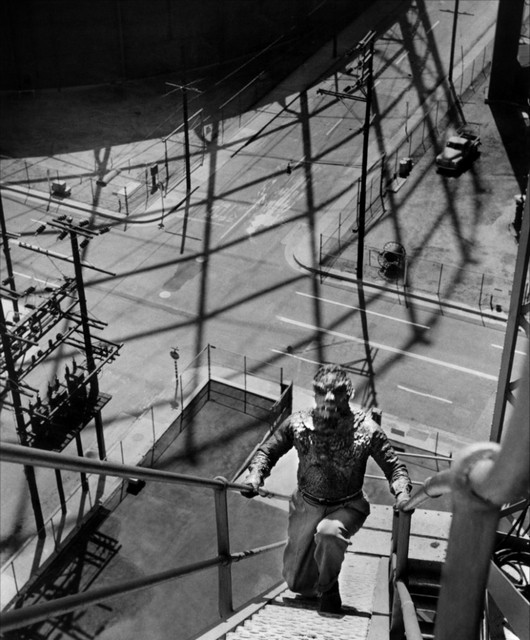
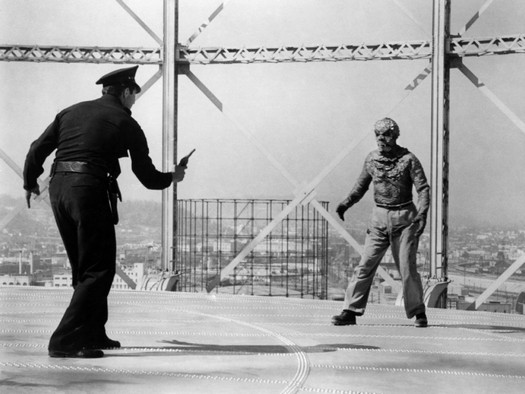
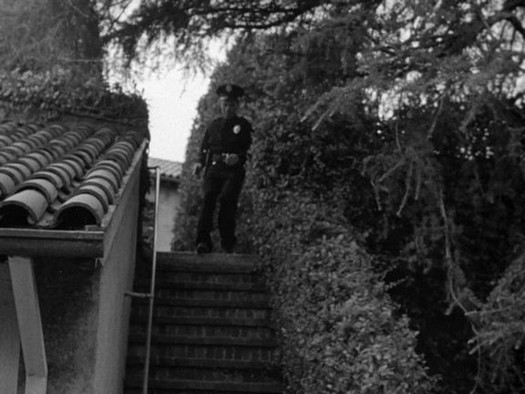
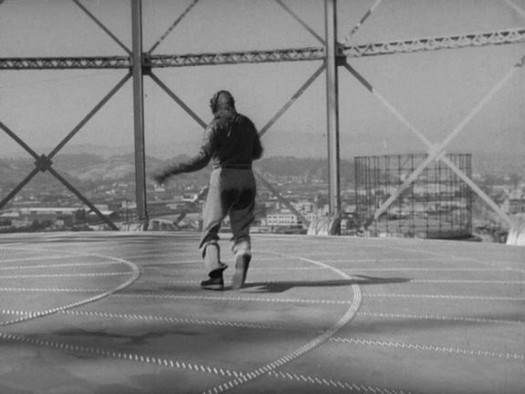
Pursued to the top of an oilrig by the police, McKenna makes one last struggle before a bullet finds its mark and sends him tumbling to his death.
ANALYSIS
On the face of it, The Hideous Sun Demon is much like The Amazing Colossal Man or The Incredible Shrinking Man in that it is a film about a man transformed by radiation. However, there's a surprising degree of sophistication to be found just under the film's scaly surface.
The film presents a stellar psychological profile of Gil McKenna, a man apart from the rest of humanity. Forced to live by night, he becomes isolated and withdrawn, quickly abandoning any hope of a cure and allowing himself to wallow in despair, pushing those who care about him away and refusing support. He even contemplates, and nearly commits, suicide.
McKenna's isolation is beautifully depicted, with a number of shots in which Clarke is alone in the frame, often in medium or long shots. There's a magnificent shot of him silhouetted against the night sky, walking along the horizon-line. Later in the film, we're treated to a number of extreme long shots of the Los Angeles oil fields, enforcing the sense of isolation and burning heat of the sun.
There's also a strong message of personal responsibility and anti-alcoholism delivered in the film. McKenna would never have become a monster if he hadn't shown up for work drunk. He wouldn't have had his second transformation if he didn't get drunk and screw Trudy on that beach all night. He wouldn't have had his third transformation and killed George if he'd followed the doctor's orders and quit drinking, and if he hadn't killed George, he never would have been chased by the police and ultimately fallen to his death. At no point is Gil McKenna a strong character. He's incapable of controlling his impulses and quick to blame others, or fate itself, for his failings. At no point does he man up and take responsibility for his actions.
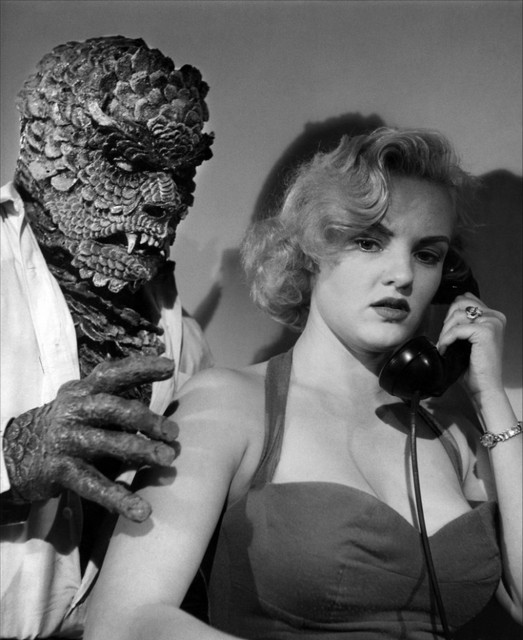
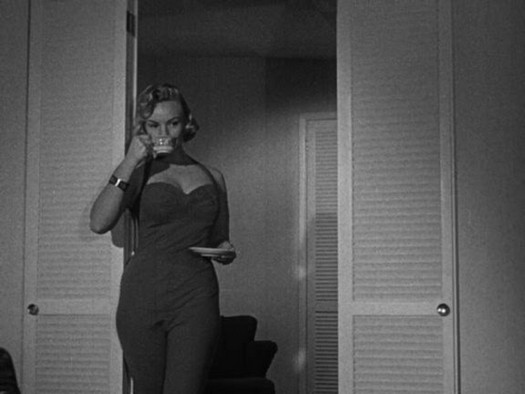
Trudy represents an interesting character study as well. A top-heavy blonde in a plunging neckline of the sort Hollywood was so enamored with during this period, I can't really call her a low-budget Marilyn Monroe. She's more on par with Mamie Van Doren in terms of thespianism, if not bustline. Something of a gangster's moll, she proves herself to be the proverbial "Hooker with a Heart of Gold" in her forgiveness of McKenna for ditching her on the beach and brings him into her apartment to recuperate. In doing so, she demonstrates the only real character development in the film.
The film has it's humorous moments as well, some of which I highlighted in my synopsis, such as Buckell's line regarding "whiskey and science" and George's gun transforming from an American-made Colt 1911 to a German Luger when exposed to sunlight. The best, however, has to be in the suit itself. To save cost, only the top half of a lizard suit was made. Chest, arms, hands, head. Below the waist, Clarke is clad in slacks and shoes. Now, funny thing about rubber. It's not an absorbent material, and in an outfit of rubber you will sweat. And sweat Clarke did, and throughout the finale of the film, one can see where that sweat trickled down the rubber, soaking Clarke's pants. You guessed it; it looks like the Hideous Sun Demon is also the Incontinent Sun Demon.
THE HIDEOUS SUN DEMON is a well-written, thoughtful, and overall fun film, with some surprising psychology and sensuality, capped off with an imaginative and appealing monster suit. All in all, I'd call THE HIDEOUS SUN DEMON a must-see piece of Classic Camp.
|

 bill
bill